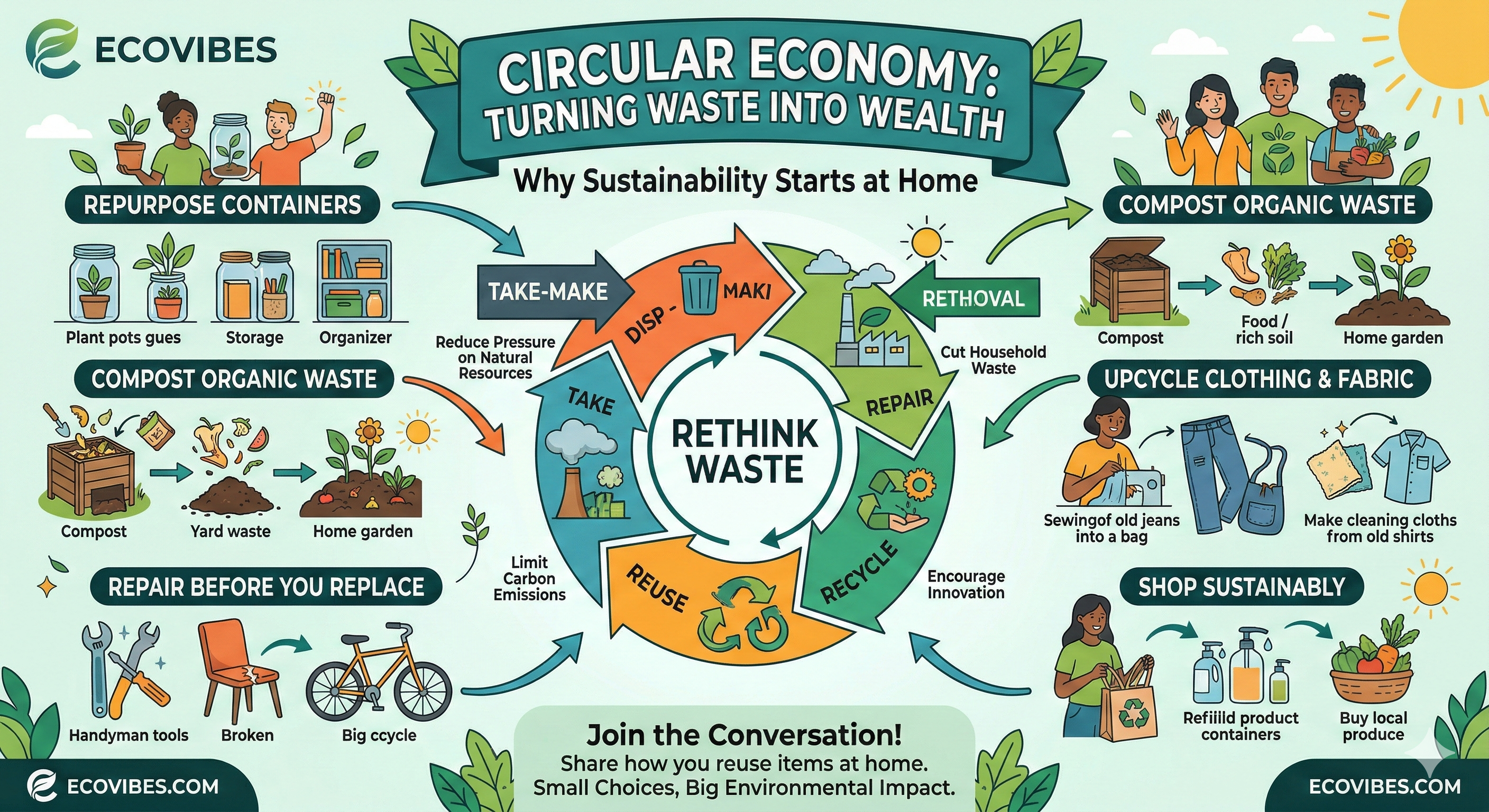
At Ecovibes, we believe sustainability is not just a trend; it’s a lifestyle shift that empowers individuals, families, and communities to create meaningful environmental impact. One of the most powerful ways to do this is by embracing the circular economy, a model that transforms how we use resources, reduces waste, and rethinks consumption.
A circular economy asks us to see “waste” differently. Because truly, waste isn’t waste until we waste it.
Instead of throwing items away, we can reuse, repurpose, repair, recycle, or upcycle them, keeping materials in use for as long as possible while minimising our carbon footprint.
Why the Circular Economy Matters
Across many African communities, waste pollution, poor recycling habits, and rapid consumption patterns are worsening environmental challenges. A circular model helps us:
Reduce pressure on natural resources
Limit carbon emissions from production and disposal
Cut household waste and promote eco‑friendly living
Encourage innovation and creative reuse
Support a greener, more resilient local economy
By adopting practical, everyday circular habits, anyone can contribute to a more sustainable world.
Simple Ways to Turn Waste Into Wealth at Home
You don’t need special tools, just a willingness to start small. Here are easy sustainable living tips to try:
1. Repurpose Containers
Glass jars, plastic bottles, and old tins make great storage containers, plant pots, or DIY organisers. This reduces purchasing new items and supports a green lifestyle.
2. Compost Your Organic Waste
Food scraps and yard waste can be turned into nutrient‑rich compost for your garden or potted plants, a perfect example of eco‑friendly practices.
3. Upcycle Clothing and Fabric
Instead of buying new, try: Turning old clothes into cleaning cloths, Upcycling denim into bags, Repurposing shirts into pillowcases
4. Repair Before You Replace
Fixing household items saves money and dramatically reduces the carbon footprint.
5. Shop Sustainably
Choose refillable products, local produce, and items with minimal packaging.
Small choices add up to a big environmental impact.
Join the Conversation
Waste is only waste if we choose to waste it. Tell us in the comments or on social media: How do you reuse items at home?
Your stories can inspire others to adopt more sustainable habits and build a stronger circular economy in their own communities.